Thermal Printer or Printed Roll Labels: Which One Actually Costs Less for Candy Sellers?
Thermal printing and printed roll labels win in different situations. Compare flexibility, finish, time, and real roll label costs before you buy.
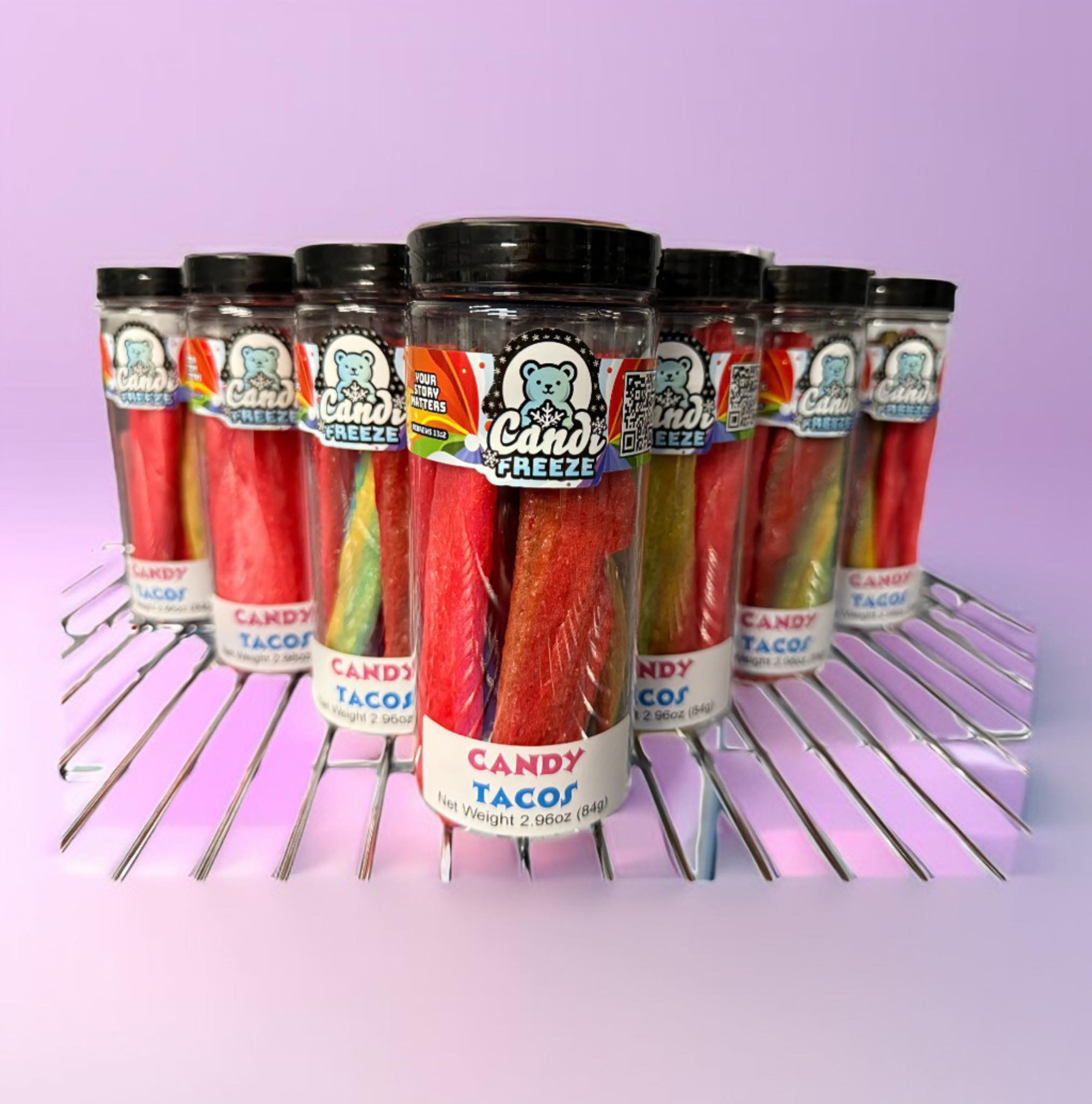
This is one of the most practical label questions a candy seller can ask. A thermal printer sits on your counter and prints what you need today. Printed roll labels arrive ready to use, in color, with the design already done. Both can be the right answer. Both can also become the expensive answer when they are used for the wrong job.
What thermal printing does best.
Thermal printing is hard to beat for change. You can print a small test batch, update a date, add a batch code, change a weight, or create a label for a flavor that may never return. There is no waiting for a shipment and no need to guess how many labels a new candy deserves.
That flexibility is worth real money. A seller testing products at one market does not need hundreds of finished labels for each idea. A short run can keep the cash in the business and the shelf clear of rolls for flavors that did not sell.
Thermal also works well for variable information on an otherwise steady package. Dates and batch details change because they are supposed to change. Printing them at packing time is logical.
The costs are spread out instead of arriving in one invoice. You pay for the printer, blank labels, any ribbon or special stock your setup uses, replacement parts over time, and the minutes spent designing, loading, aligning, and reprinting mistakes. Those minutes count. A label that looks cheap can become expensive if every market week begins with a printer fight.
What printed roll labels do best.
Printed rolls give you a finished label. The brand can use full color, a planned layout, and a consistent material across the whole run. The labels arrive ready for the packing table, so the work shifts from producing labels to applying them.
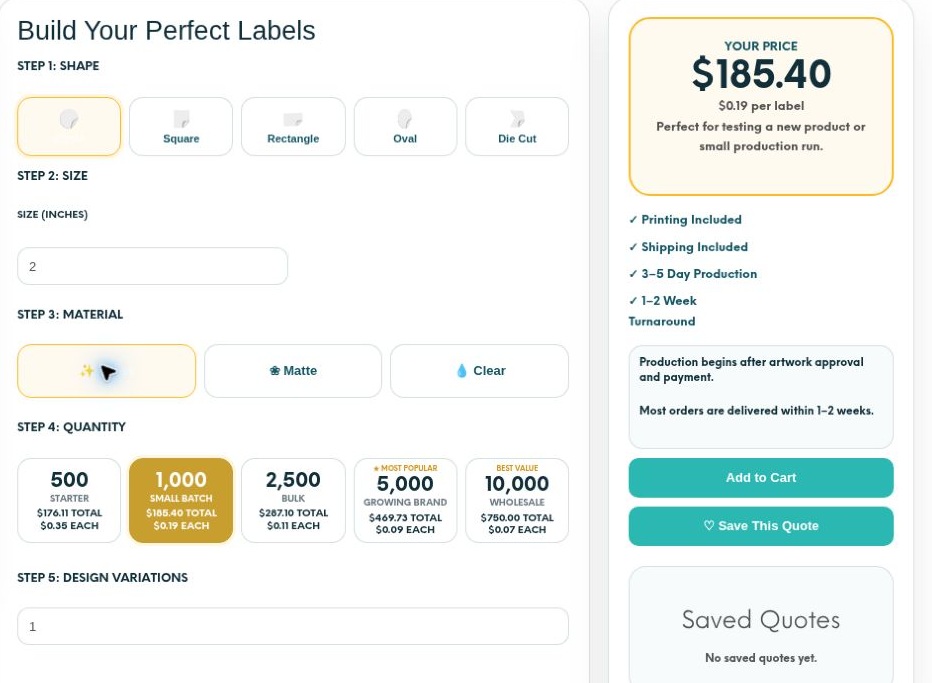
At useful quantities, the per label cost can fall quickly. The examples below use print ready artwork, one design, white gloss or matte, and include printing and shipping in the Custom Roll Labels quoter.
| Label and quantity | Total | Cost per label |
|---|---|---|
| Round 2 inch, 500 | $176.11 | $0.35 |
| Round 2 inch, 1000 | $185.40 | $0.19 |
| Round 2 inch, 5000 | $469.73 | $0.09 |
| Rectangle 2x5 inch, 1000 | $348.21 | $0.35 |
| Rectangle 2x5 inch, 5000 | $1495.23 | $0.30 |
The round 2 inch example shows why quantity matters. Moving from 500 to 1,000 adds only $9.29 to the total and nearly cuts the per label cost in half. A larger label costs more, as expected, but its per label price still falls as the run grows.
If you need artwork help, keep those choices in the comparison. A file review and print check is $20 in the quoter. Custom label design is $100. Those are one time project costs, not a charge on every label.
Printed labels are less forgiving when information changes. A new ingredient, business detail, or required statement can make a roll outdated. A big run is a bargain only when the design is settled and you will actually use the labels.
Durability and appearance are part of the price.
A label has to survive handling, bags going into totes, market setup, and customers picking up the package. It also has to be readable when it reaches the buyer. Ask how each option handles moisture, rubbing, sunlight, and the material of your package. Test it on the real bag or container, not on a smooth counter.
Printed rolls usually make the stronger first impression when the artwork uses color and the finish is chosen for the package. Thermal labels can look clean and professional too, especially when the layout is simple and the branding is handled elsewhere. The question is not which one looks expensive in a photo. It is which one stays clear and presentable through the way you sell.
Start with the right size.
Before pricing either system, measure the package. The Label Size Recommender on the Label Tools page asks for the package style and the usable front width and height, then recommends a label size using a 70 to 85 percent coverage rule. That rule helps you avoid a label that is too small to read or so large that it wrinkles around the package.
Try the recommended size as a paper cutout first. Put your longest flavor name, required information, and date area on it. A cheap label in the wrong size is still the wrong label.
A fair way to decide.
Choose thermal first if your flavors rotate constantly, your runs are tiny, your information changes often, or you are still proving the product. Choose printed rolls if the design is stable, you use labels every week, color and finish matter, and you want packing to move faster.
Many sellers land in the middle: printed labels for the steady brand information and thermal printing for details that change. Run your actual size and quantity before buying. The winner gives you a readable, durable label at a cost your candy can carry.
Tool link: Custom Roll Labels quoter
Examples are illustrative unless stated otherwise. These guides use AI-assisted drafting and do not represent product tests or guaranteed business results. Read our editorial approach.